Short-Term Rentals in Tel Aviv: How to Choose
Most people arriving in Tel Aviv for a week or two are not really looking for a room. They are looking for a base: somewhere to drop the bags, make coffee before the beach, come back to in the middle of a hot afternoon, and leave from without a production every morning. A short-term apartment does that in a way a hotel room rarely does, but only if you choose it on the right criteria.
The difficulty is that short-term rental listings all look similar at first glance. Photographs are flattering, the neighbourhood names blur together, and the price you see on a search page is almost never the price you pay. This guide is about the decisions that actually change the quality of a short stay in Tel Aviv, in the order you should make them.
What "short-term" actually means here
In Tel Aviv, a short-term rental usually means anything from three nights to about four weeks. Below three nights, most owners either decline or apply a surcharge that makes the arithmetic unattractive, because a one-night turnover costs nearly as much to service as a week. Above a month, you move into a different market with different pricing logic, different expectations about furniture and utilities, and often a different kind of contract.
That middle band is where the city is genuinely good value. You get a furnished home with a kitchen, a washing machine and a living room for something close to the price of a mid-range hotel room, in neighbourhoods where hotels either do not exist or cost considerably more. If your stay runs longer than four weeks, our guide to long-term and monthly stays in Tel Aviv covers the different questions that apply.
Let the length of the stay choose the apartment
The most common mistake is choosing an apartment by photograph rather than by the shape of the trip.
For three to five nights, compactness wins. You will be out most of the day, you will not cook elaborate meals, and the walk to the beach or the market matters more than the square footage. A well-located studio beats a larger apartment twenty minutes further out, because on a short trip the transport time is a meaningful fraction of the holiday.
From about a week, the calculation changes. You start wanting a proper kitchen, somewhere to sit that is not the bed, and enough storage to unpack. Outdoor space stops being a luxury and becomes the thing that makes the evenings. For groups and families, separate bedrooms stop being optional the moment people keep different schedules.
Beyond two weeks, think about the boring things: where the laundry happens, whether there is a supermarket you would actually use, whether the living area works when it rains for two days. Those details decide whether a long stay feels comfortable or merely tolerable.
Seasons move the price far more than the address
Visitors often assume location drives the price in Tel Aviv. Over a year, the calendar drives it harder.
Spring and autumn are the city at its best and are priced accordingly. Summer is hot and humid but fills up anyway, because the beach carries the season. Winter is mild by European standards, genuinely quiet, and by some distance the best value — a January week in a good apartment often costs less than a shoulder-season weekend.
Jewish holidays are the real variable. Rosh Hashanah, Sukkot, Passover and the days around them compress demand into short windows, and prices during those windows behave differently from the rest of the month around them. The same is true in reverse: the weeks immediately after a major holiday are frequently the cheapest of the season. If your dates are flexible by even a few days, checking the days either side of a holiday is usually worth more than switching neighbourhoods.
One structural point about Tel Aviv specifically: the week here runs Sunday to Thursday, and Friday and Saturday are the weekend. Rates and minimum-night rules follow that rhythm, not the European one. A Thursday arrival is a weekend arrival.
What an apartment gives you that a hotel does not
The honest answer is control, and it is worth being specific about what that buys.
A kitchen changes the economics of a trip. Breakfast at home in Tel Aviv is not a sacrifice — the markets are excellent and the produce is the point — and it buys back an hour every morning. A washing machine means packing for five days instead of twelve. A living room means the group can be together without being in a bedroom.
There is also a quieter advantage: you live in a neighbourhood rather than a hotel district. You buy bread where the neighbours buy bread. Over a week, that is the difference between having visited Tel Aviv and having spent a week in it.
What you give up is hotel service: no daily housekeeping, no front desk at three in the morning, no restaurant downstairs. Good hosts close most of that gap on request — groceries stocked before arrival, airport transfers, cleaning mid-stay — but it is arranged in advance rather than summoned by phone. That trade is the entire decision, and it is worth making consciously.
Verify these things before you commit
Once you have a shortlist, the checks that matter are unglamorous.
Confirm the actual street, not just the neighbourhood name. Tel Aviv neighbourhoods are small and their edges do real work — three streets can be the difference between a two-minute and a fifteen-minute walk to the sea. Confirm which floor the apartment is on and whether there is a lift; many of the best buildings in the centre are old, charming and walk-up.
Ask what the total is, including cleaning, and whether the price is fixed for your dates. Ask about air conditioning in every room you intend to sleep in, because between June and September this is not a detail. Ask how check-in works if your flight lands at two in the morning, which in Tel Aviv it very often does.
Finally, get the answers in writing from the person who will actually host you. Our checklist for booking a Tel Aviv apartment directly with confidence goes through the specific questions to ask and the answers that should reassure you.
Arrival, keys and the first hour
The first hour sets the tone of the stay, and it is almost entirely a logistics problem.
Ben Gurion is close — thirty to forty minutes by road in normal traffic — but flights into Tel Aviv cluster at difficult hours. Establish before you travel whether check-in is self-service or in person, what happens if you are early, and where the bags go if the apartment is not ready. A host who answers those three questions clearly in advance is usually a host who answers everything else clearly too.
Agree how you receive the keys, what the entry code is if there is one, and who to call if something in the apartment is not working. Note also that Friday afternoon through Saturday evening runs on a different rhythm in Israel, and an arrival in that window needs to be arranged rather than assumed.
What should already be included
For a short stay, a well-run apartment should arrive ready: linen and towels provided, the place professionally cleaned, working Wi-Fi you can actually run a call on, functioning air conditioning, and a kitchen with more than a kettle. None of that should be an extra.
Beyond the basics, the useful additions are the ones that save time rather than impress: a grocery delivery waiting when you land, a transfer booked from the airport, a restaurant table that would otherwise need a local phone call. At Or Hakerem those are available on request rather than bundled into a headline rate, which keeps the price honest for guests who do not need them.
How far ahead to book
The answer depends almost entirely on the season, not on the quality of the apartment.
For spring and autumn dates, and certainly around the holidays, three to six months ahead is entirely reasonable. The good central apartments are few and they go first. If you are coming for a family event that already has a date, there is no reason to wait: the date will not move, but the inventory will.
For winter, and for the weeks after the holidays, you can book far closer in. Two to four weeks ahead is usually enough, and availability sometimes exists at a few days' notice. That is also the window where there is real room to negotiate on a longer stay.
There is one case where you should reserve as early as you possibly can: when your dates fall on a long Israeli weekend or on Chol HaMoed. Those are the days Israelis are also looking for somewhere, and domestic demand does not show up on a tourist calendar.
Book the stay, not just the room
The apartments that work for short stays in Tel Aviv are not the ones with the best photographs. They are the ones where the location removes daily friction, the dates are priced honestly, and the host answers questions before you have to ask twice.
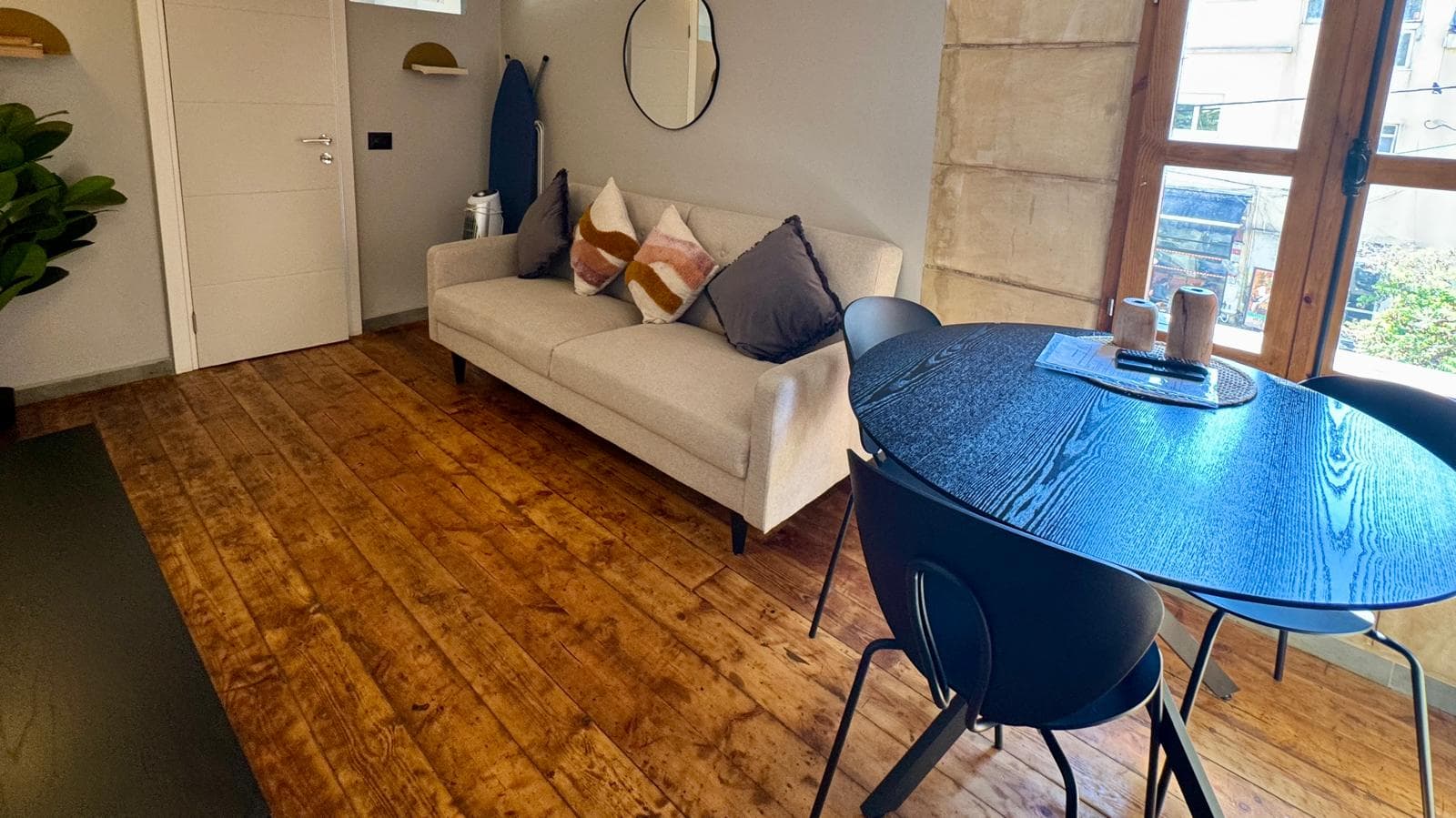
If your trip is short and central, the cosy studio is built exactly for that — one or two guests, a few minutes from the sea and Carmel Market, with nothing between you and the city. For groups, longer stays or anyone who wants outdoor space in the evenings, browse the full range of Or Hakerem properties and tell us the shape of your trip.
Send your dates through the reservation page and we will come back with a clear total for those exact nights, including everything, so you can compare it honestly against anything else you are considering.
Ready to experience Tel Aviv?
Stay in the heart of Kerem HaTeimanim — just steps from Carmel Market and Banana Beach.