Hanukkah in Tel Aviv: Sufganiyot and Lights
For eight nights in December, Tel Aviv smells of frying dough. Bakery windows fill with trays of sufganiyot, the filled doughnuts Israelis eat through the whole of Hanukkah, and after dark small lamps and candle holders appear on windowsills and balconies across the city. Hanukkah is not a holiday that shuts anything down — offices, shops and restaurants generally keep running — so a visitor gets the festival layered over an ordinary working city rather than instead of it.
This guide covers what those eight nights look like from Kerem HaTeimanim, the old Yemenite Quarter beside Carmel Market: the 2026 dates and the unusual way they fall, where the local press has sent people for doughnuts, and what to expect in the streets.
Hanukkah 2026: Friday 4 to Saturday 12 December
According to Hebcal, Hanukkah 2026 begins at sundown on Friday 4 December and ends at nightfall on Saturday 12 December. The first candle is lit on the Friday, and the eighth — when all eight lights burn together — on Friday 11 December.
The calendar does something this year that it does not do every year: both the first and the last night of lighting fall on a Friday, the eve of Shabbat. In between come six evenings: Saturday 5 December, then five ordinary weeknights, from Sunday 6 to Thursday 10. That shapes the week in a practical way, because on a Friday the candles cannot simply be lit after dark.
The eighth day, Saturday 12 December, is also the end of the festival. Hebcal notes that 11 December coincides with Rosh Chodesh Tevet, the start of a new Hebrew month — not something most visitors will notice, but you may hear it mentioned in synagogue or at a family table.
Because the festival does not close the city, there is no need to plan around it the way you would around Yom Kippur or Passover. What changes is the evening atmosphere, the food, and — on the two Fridays — the timing of things.
Lighting the first and the last candle on a Friday
On most nights, Hanukkah lights are lit after dusk (Hebcal says "at nightfall" only for the Saturday). On a Friday the order is reversed by Shabbat: the Hanukkah candles are lit first, before sundown, and only then the Shabbat candles, since once Shabbat has begun no new flame is kindled. Hebcal's listing for both Fridays says exactly this.
Two practical consequences follow, and they are the ones families travelling with a hanukkiah tend to ask about:
- Timing. In Tel Aviv in early December, sunset comes in the late afternoon, so the Friday lighting happens earlier than many people expect. Check the exact local time for 4 and 11 December on Hebcal or a local Jewish calendar a few days before.
- Fuel. The candles are lit earlier than usual and must still be burning after dark, so common practice is to use longer candles or more oil than the small standard ones, which may not last. Customs differ between communities; if this matters to you, ask your own rabbi.
On Saturday night, 5 December, the order flips again: Shabbat ends first, and the Hanukkah lights follow once it is over. Practice varies on the precise sequence with Havdalah.
For what stays open on Saturday and how to get around when the trains stop, see our guide to Tel Aviv on Shabbat. For observant guests planning a stay, Shabbat-friendly stays in Tel Aviv covers what to ask.
Sufganiyot season, according to the local press
Hanukkah commemorates the rededication of the Temple and the story of a small quantity of oil that lasted eight days. The food follows the oil: almost everything eaten for the festival is fried. In Ashkenazi homes that means latkes, potato pancakes; across Israel as a whole it means sufganiyot, which have long since outgrown their origins as a plain doughnut with a dab of red jam.
Bakeries in and around Tel Aviv treat the weeks before Hanukkah as a launch season. Time Out Israel, in a 2019 round-up by Jacob Jaffe, described how bakers in Tel Aviv and nearby each produced a themed collection: one drew on French pastry classics; another, Biscotti in neighbouring Bnei Brak, on Israeli childhood snacks such as Bamba and Krembo; a third worked with a dance company to design its fillings. The piece also noted vegan versions alongside the classic jam doughnut — a sign of how far the category had moved.
Ynet made a similar point the same month. In a guide by Buzzy Gordon to six places for sufganiyot and latkes, it observed that the simple jelly doughnut had given way to far more elaborate creations, with bakeries competing on ever more elaborate versions. It also included gluten-free doughnuts and a latke specialist — useful if someone in your group cannot eat wheat or simply prefers potato.
Both articles date from 2019. Bakeries change their ranges every year, some move or close, and none of what follows should be read as a promise about what will be on the counter in December 2026. Treat the names below as a starting point and check current opening hours and offerings before you walk over.
Where to find doughnuts on foot from the Kerem
One of the bakeries both sources named is within walking distance of Kerem HaTeimanim:
- Dallal, at Kol Israel Haverim 7 in Neve Tzedek. Time Out singled out its 2019 collection made with a dance company; Ynet described brioche-style doughnuts. Neve Tzedek lies just south of the Kerem, and the walk through the old lanes is pleasant in itself — roughly a quarter of an hour, depending on your route. The address still held in 2026: Time Out Israel cited Dallal there in April 2026, in a piece on Passover cakes. Check opening hours before you go.
In 2019 both articles also praised Metuka for its strawberry jam from Kibbutz Yad Mordechai, with a "collage" of doughnuts (Time Out) and vegan options (Ynet). The branch they named no longer appears on Metuka's own list of shops, and we know of no current one within walking distance of the Kerem.
Two other places Ynet recommended are in Tel Aviv but not in this part of it. Bli Kemah, the gluten-free bakery, was listed at HaBarzel 32 in Ramat HaHayal, the business district in the city's north-east — a bus or taxi ride rather than a stroll. Sulica, for latkes, was at Einstein 7 in Ramat Aviv, north of the Yarkon river. Worth the trip if you are already heading that way, less so as a doughnut errand.
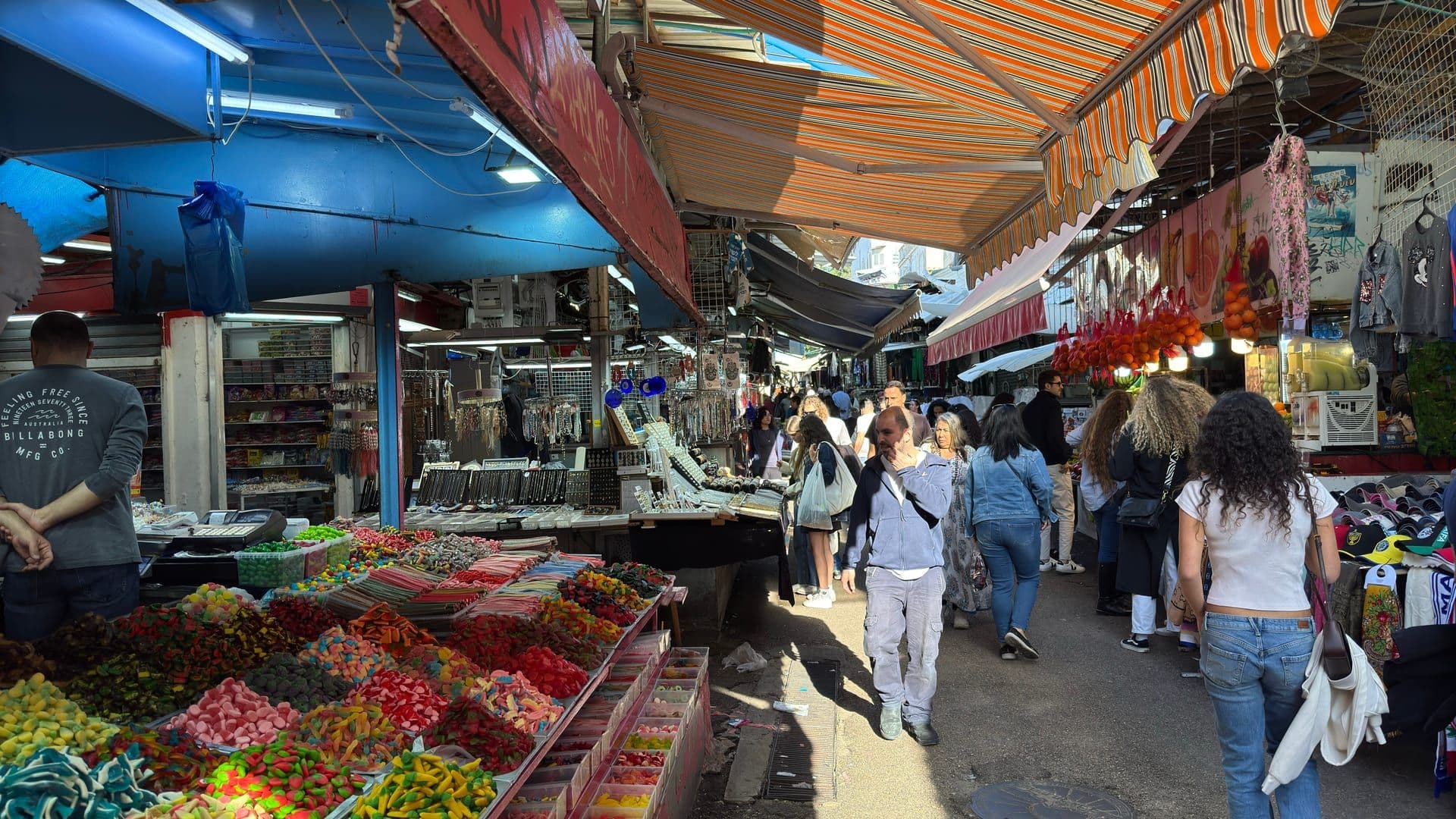
Time Out also mentioned larger chains with several branches around the city, so a sufganiya is rarely far away. And then there is Carmel Market, two minutes from the Kerem, with bakeries of its own; in Hanukkah week sufganiyot commonly turn up on counters across the city, though we have not checked which stalls will have them. Neither source reviewed the market's bakeries, so we will not either, but the shuk is likely the easiest place to try one without planning anything. Our article on how Carmel Market began explains why it sits right on the edge of the quarter.
Public lightings and the feel of the city
Hanukkah in Tel Aviv is mostly a domestic festival made visible. The most common sight is not a ceremony but a window: a hanukkiah on the sill, lit at dusk, with the number of flames growing by one each night. In the narrow streets of the Kerem and Neve Tzedek, where houses are low and close together, an evening walk on the later nights of the festival passes a good number of them.
Public lightings in squares and open spaces are a familiar Hanukkah custom in Israeli cities, often run by local authorities, community organisations or other groups. We have not been able to confirm a 2026 programme for Tel Aviv — which squares, which nights, what time — so we will not list one. The city's events listings and local news sites usually publish details in the days before the festival.
Israeli schools usually have a Hanukkah holiday (check the year's dates), so you may see more families out in the afternoons, and some cultural venues may run activities for children; check their own listings. Restaurants and cafés generally keep their usual hours, since Hanukkah is not a day of rest, though it is worth checking any place you particularly want; some add a sufganiya or a latke to the menu for the week.
December in Tel Aviv, briefly
Hanukkah falls in the short days of the year. Evenings come early, which suits a festival of lights, and a rain shower is possible. The market tends to be at its busiest on Thursday and Friday mornings as the city shops before the weekend. For a fuller picture of what December is like, and how it compares with the rest of the year, see our guide to the best time to visit Tel Aviv.
Spending the eight nights in an apartment
Hanukkah is a festival people tend to keep at home: lighting together each evening, frying something, eating it while it is still warm. A hotel room makes that awkward. An apartment does not.
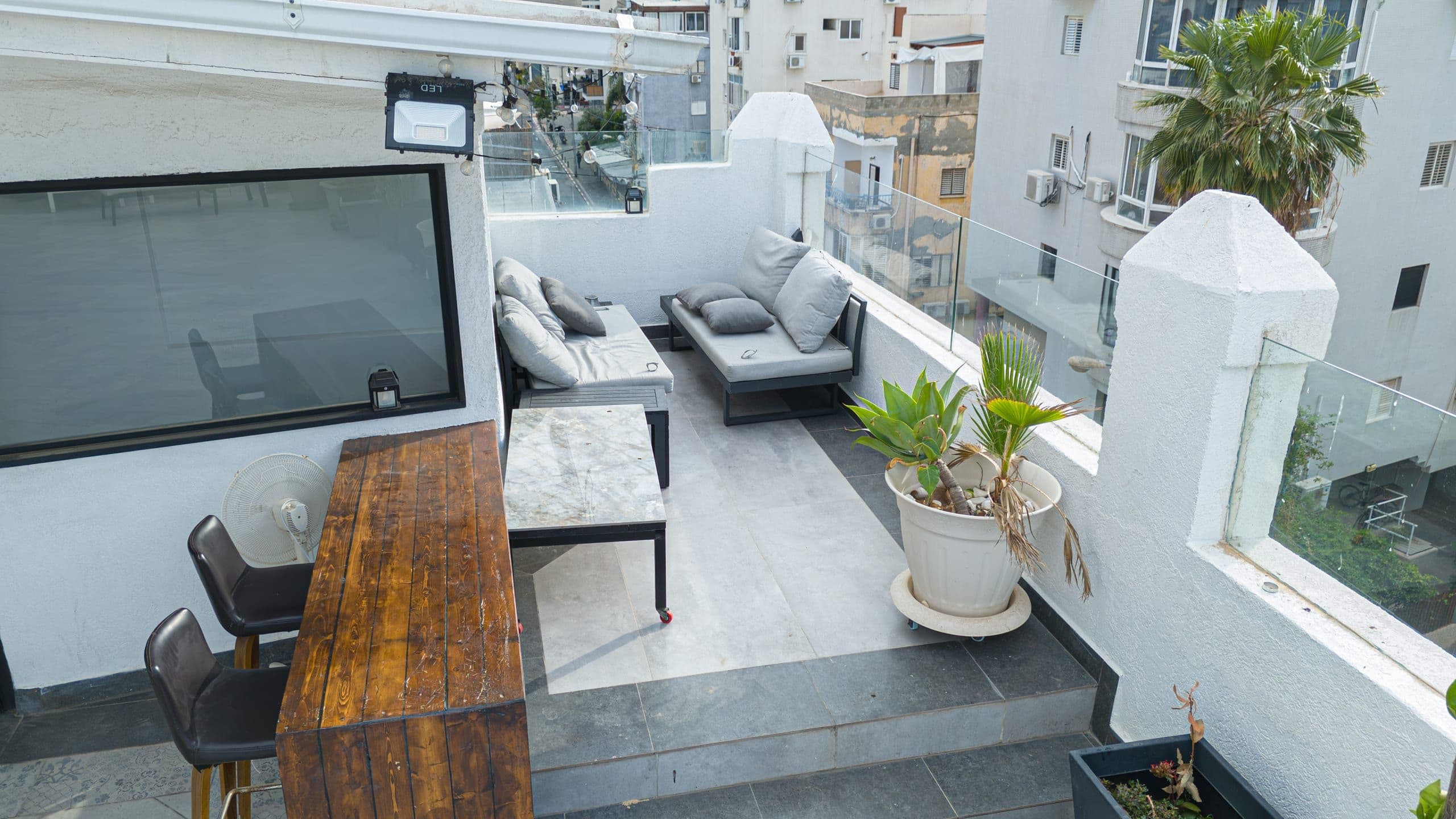
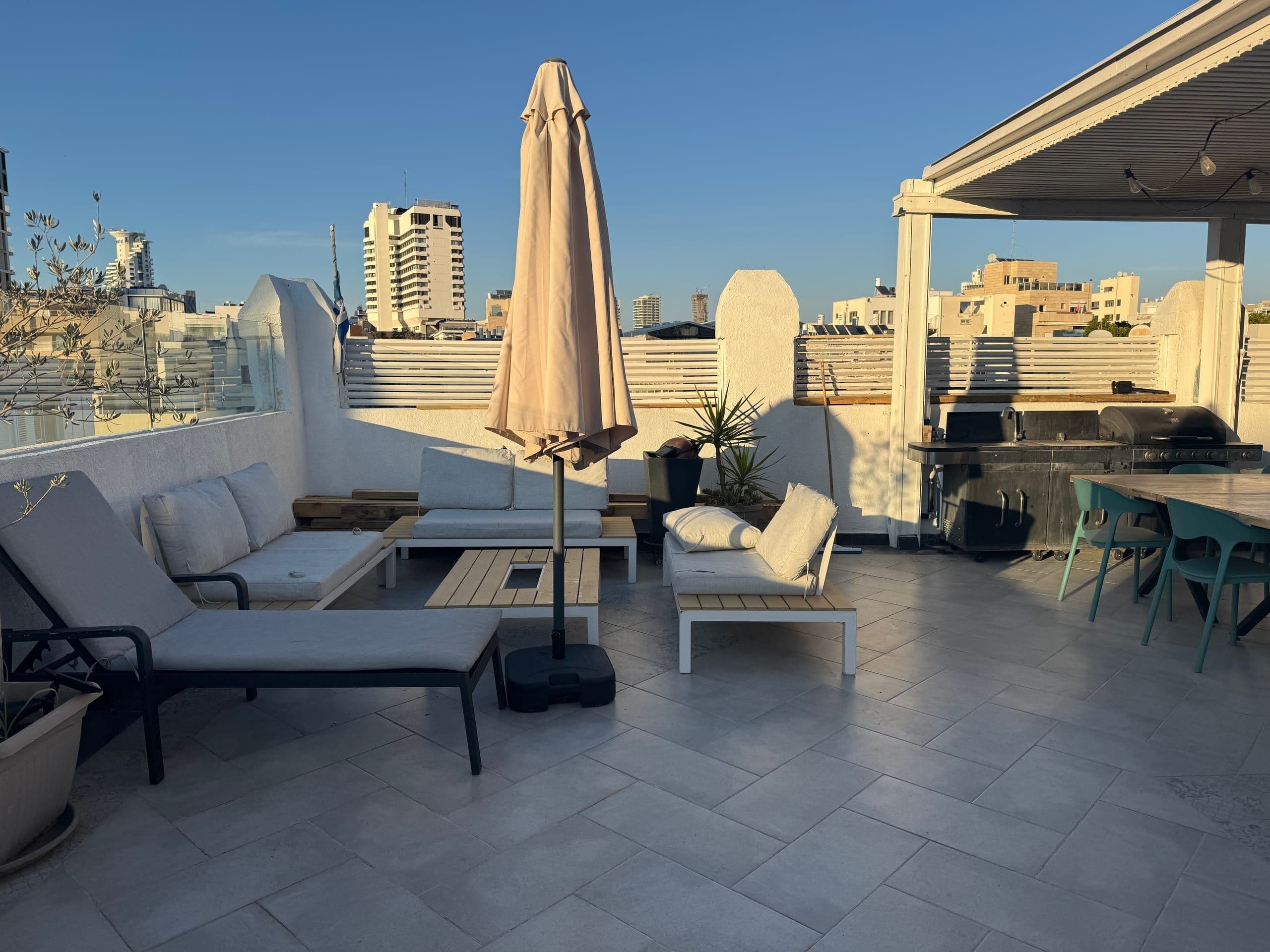
The penthouse at Or Hakerem sleeps up to seven guests across three bedrooms, with a fully equipped kitchen — oven, coffee machine, microwave — and a round dining table beside it, which is enough for a family to cook its own latkes if the bakeries have not already won the argument. Above it is a private rooftop terrace with lounge seating, a barbecue and sea views, a good place to watch the late-afternoon light go before the Friday candles. The second apartment, a one-bedroom for up to four guests with a compact, fully equipped kitchenette, suits a couple or a small family.
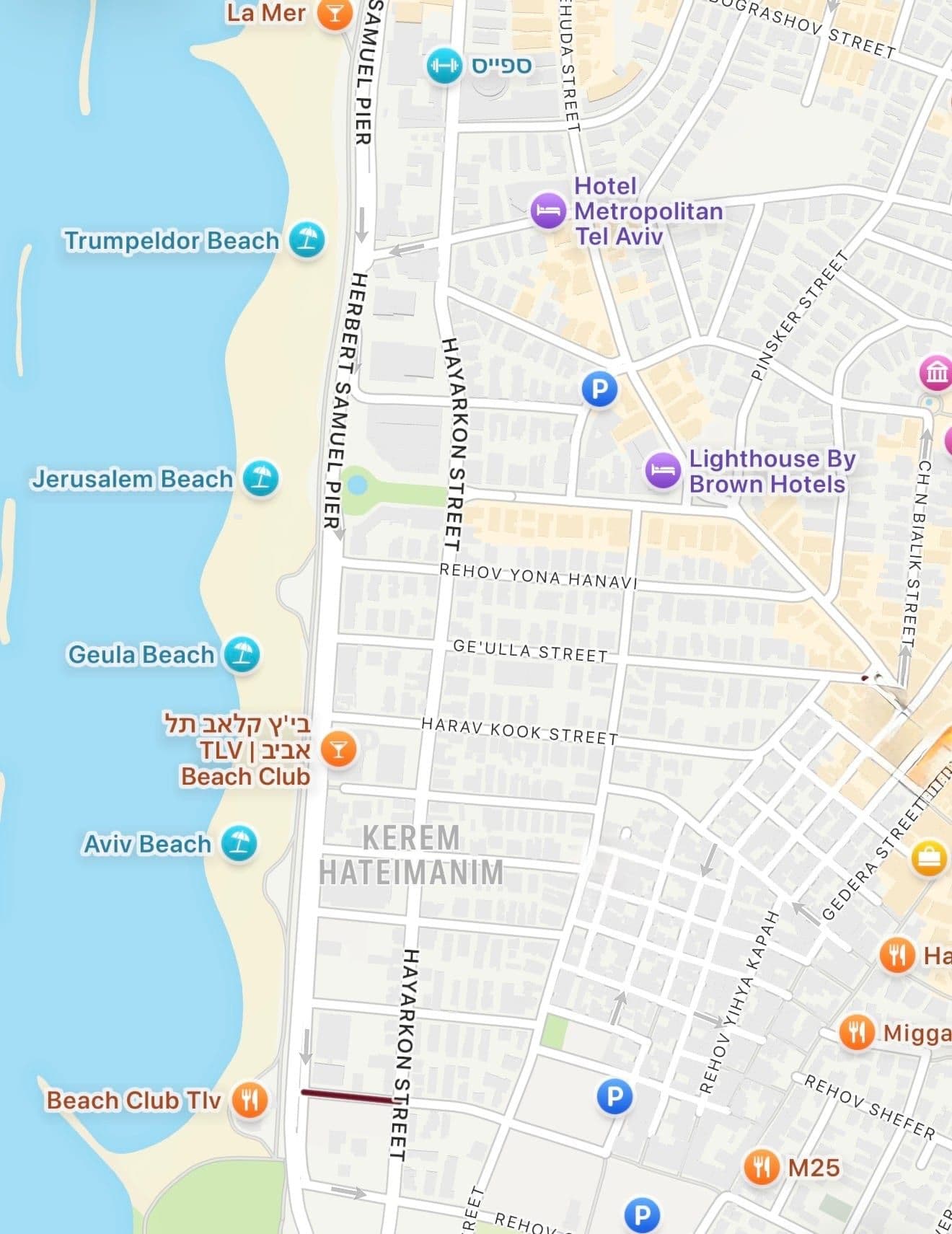
Both are in the Kerem, a short walk from Carmel Market, the beach and Dallal. If you are planning to spend some or all of 4 to 12 December in Tel Aviv, you can check availability and send a request on our reservation page.
Sources
- Hebcal, "Chanukah 2026", for the 2026 dates and the before-sundown lighting on 4 and 11 December.
- Time Out Israel, "Sufganiyot Season: Find out where to pick up Israel's most decadent donuts", Jacob Jaffe, 12 December 2019.
- Ynet, "Six super Sufganiyot and Latkes", Buzzy Gordon, 29 December 2019, for the bakery addresses.
- Time Out Israel, Passover cakes 2026 (in Hebrew), 1 April 2026, confirming Dallal's address.
Ready to experience Tel Aviv?
Stay in the heart of Kerem HaTeimanim — just steps from Carmel Market and Banana Beach.