How Carmel Market Began
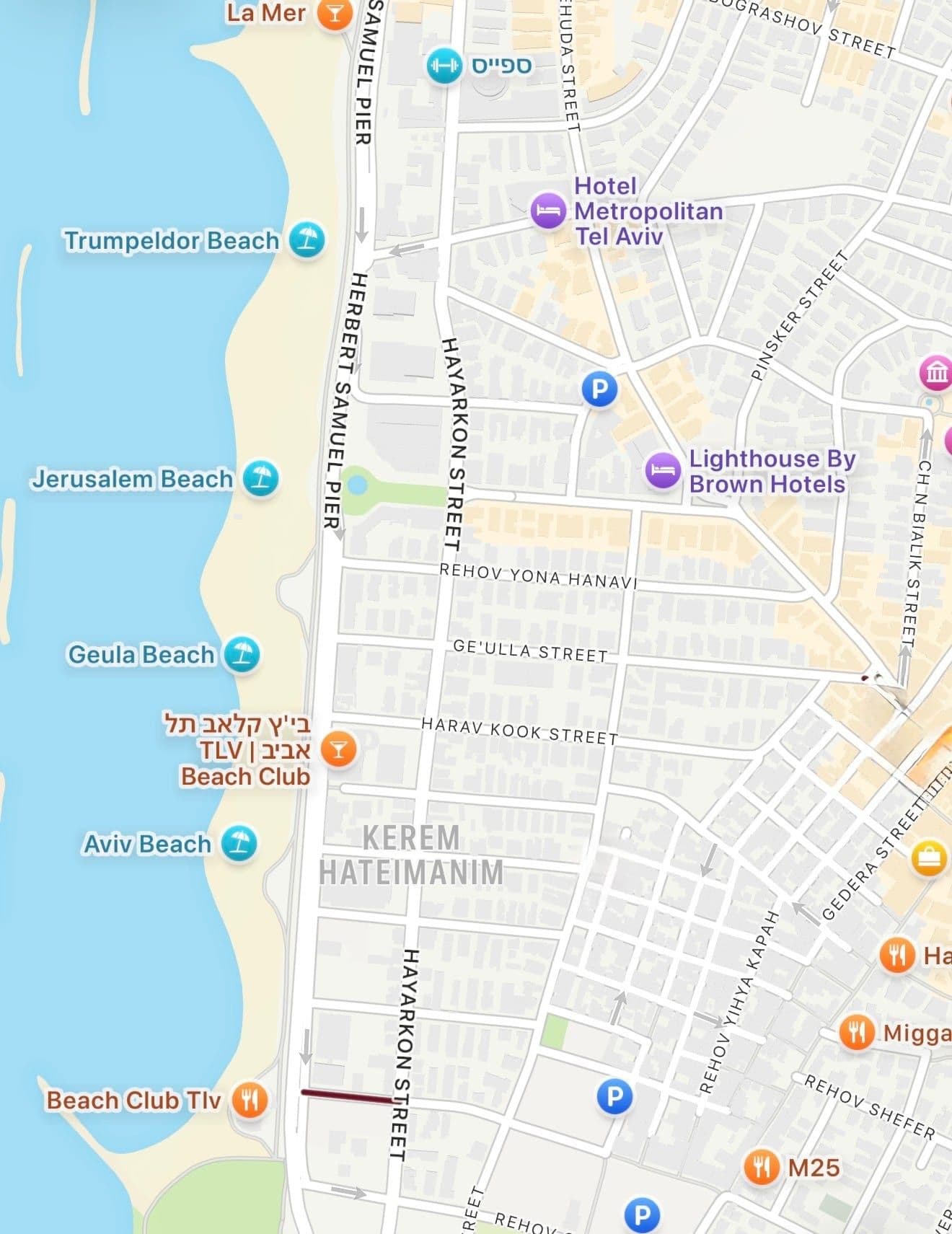
Carmel Market now runs for most of a kilometre and is the largest shuk in Tel Aviv. It did not start as a market, and it did not start as Carmel. It began in the 1920s as an informal row of stalls inside Kerem HaTeimanim, the Yemenite quarter that had been laid out on the dunes in 1906 — and for its first years the people who shopped there simply called it HaKerem, the vineyard, after the neighbourhood around it.
Everything the market is today follows from that accident of location. This is how it happened. For what to buy and where to walk now, our guide to Carmel Market and Banana Beach covers the ground floor by floor.
A neighbourhood that happened to be in the way
Kerem HaTeimanim sat between Jaffa and the new Jewish neighbourhoods spreading north across the sand. People moving between the two passed through it, and where people pass, someone sells. Residents began trading from their doorways and from improvised stands along the lane that is now HaCarmel Street.
There was nothing planned about it. The quarter was poor, the houses were single-storey with tin roofs, and selling produce to passing traffic was a way to make the week work. The first traders were local — the market grew out of the neighbourhood rather than being placed inside it.
The traders who arrived after 1917
The informal market became a commercial one when a second group joined it. After the upheavals that followed 1917, Jewish families left Russia in large numbers, and some reached Palestine with trading experience and very little else.
The accounts commonly given credit the Zionist organiser Arthur Ruppin with helping settle them, and describe a first formal cluster of around twenty stalls established by these newcomers alongside the existing Yemenite traders. Those details come largely from tourism and press write-ups rather than archival work, so treat the specific numbers with some caution — but the broad shape is consistent across sources, and it explains the market's character. A Yemenite neighbourhood market acquired an Eastern European commercial layer, and the mix is still legible in what the stalls sell.
Dizengoff gives it a name
The municipality came last. Meir Dizengoff, Tel Aviv's first mayor, is credited with recognising what had grown up on the city's southern edge and formalising it — putting municipal money into the site and regularising the stalls.
With the formalisation came the name. The market took it from HaCarmel Street, its main spine, and Shuk HaCarmel replaced HaKerem in general use. The neighbourhood that had produced the market lost its claim to it in the process, which is why most visitors today have no idea the two are connected.
Spreading into the streets around it
A market that starts informally keeps growing informally. Shuk HaCarmel pushed outward from Carmel Street until it reached Allenby Street to the north and Magen David Square at the top, and spilled into the side lanes on both sides.
The most visible expansion is Nahalat Binyamin, the pedestrian street running off the market's northern end. Twice a week — Tuesdays and Fridays — it fills with an artisans' fair: independent makers selling craft, art and jewellery, quite distinct in character from the produce stalls a few metres away. On other days it is a quiet street of cafés.
In the 1960s and 1970s there were serious proposals to move the market elsewhere. They met sustained local resistance and came to nothing, which is the reason Tel Aviv's main shuk is still in the middle of the city rather than relocated to a purpose-built site on the edge of it.
What the Yemenite founding left behind
The clearest surviving trace of where the market came from is edible.
Yemenite Jewish cooking arrived with the families who settled the quarter and never left it. Jachnun, the slow-baked rolled dough traditionally left in a low oven overnight and eaten on Shabbat morning, and malawach, its pan-fried flatbread cousin, both moved from the Kerem's kitchens into the Israeli mainstream — they are now sold nationwide by people with no connection to Yemen at all. Samneh, the clarified and fermented butter that gives Yemenite dishes their particular depth, is still sold in the market and still divides opinion among people who did not grow up with it.
Hilbeh, the whipped fenugreek relish, and s'chug, the coriander-and-chilli paste that has travelled furthest of all, come from the same kitchens. S'chug now appears on menus in cities that have never heard of Sana'a.
The restaurants in the quarter behind the market are where this is least diluted, and several have been run by the same families for decades. They are also, for the most part, closed on Shabbat — a detail covered in our guide to the vineyard that predates Tel Aviv, along with the rest of the neighbourhood's history.
How the market is laid out today
The shape of the market still follows the way it grew, which is why it can feel disorienting on a first visit. It was never designed, so there is no logic to find — only a sequence to learn.
Enter from Magen David Square at the Allenby end and the first stretch is the least interesting: cheap clothing, phone cases, sunglasses, luggage. Many visitors stop here, conclude the shuk is a tourist trap and turn round. That is a mistake — it is the part that faces the main road, and it sells to people passing rather than to people shopping.
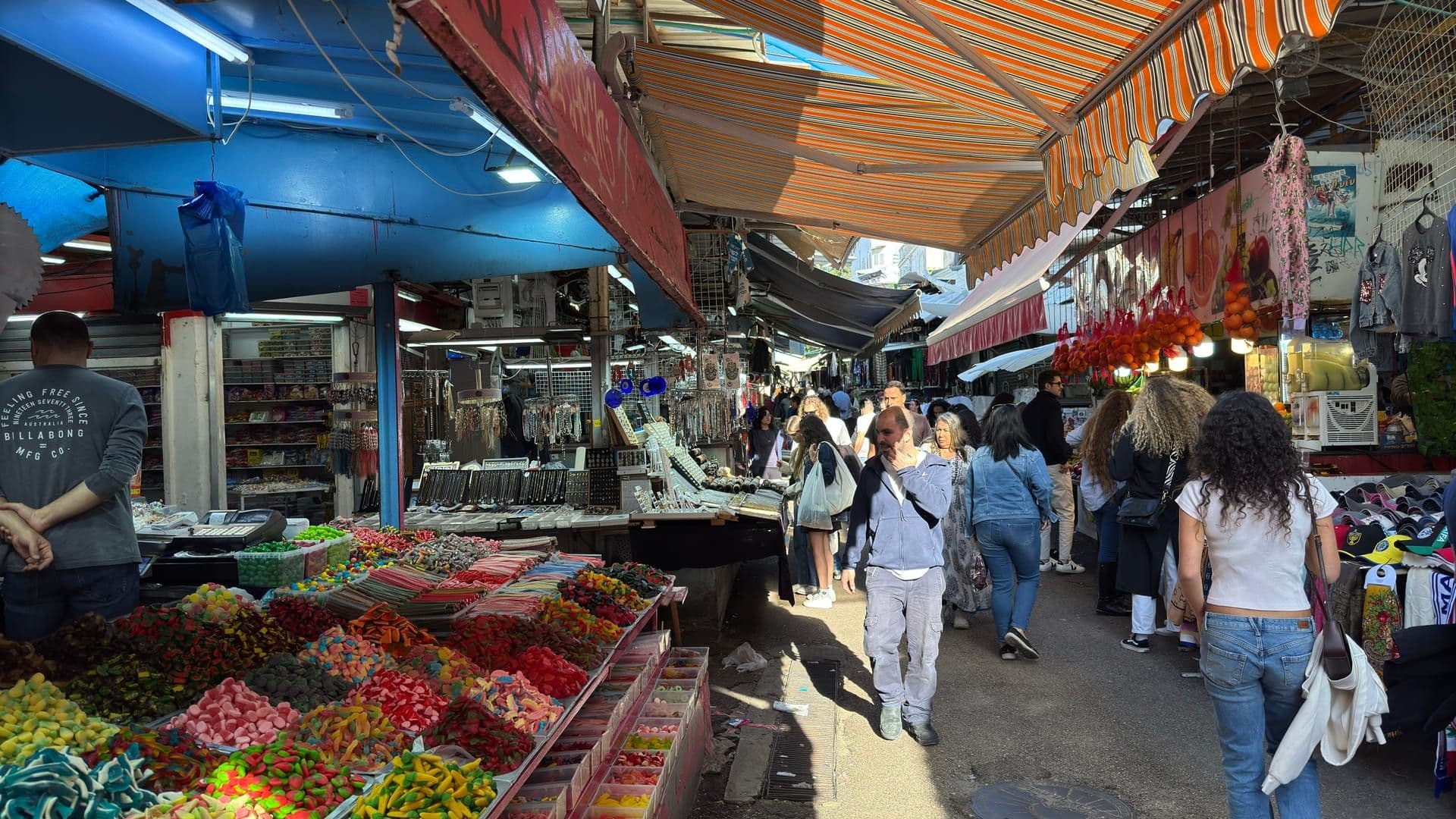
Keep going and the character changes. The middle section is where the food begins: produce first, piled by the crate and priced by the kilo, then spices, nuts and dried fruit, halva in slabs, olives and pickles by the barrel. This is the part that has been doing the same job in the same place for a century.
Further down, towards the Kerem end, come the fish and meat stalls, the cheese counters, and the bakeries. The smell tells you where you are without looking.
The side lanes matter as much as the main one. HaShomer, Rabbi Akiva and the alleys running east and west off the central spine hold the smaller operators: a single-counter hummus place, a juice stand, a spice merchant whose shop is narrower than its doorway. Prices tend to be lower a few metres off the main drag, and the queues are local rather than visiting.
At the northern end, Nahalat Binyamin runs off at an angle — pedestrianised, lined with cafés, and twice a week filled by the artisans' fair.
The practical advice is to walk the whole length once without buying anything, then come back for what you want. The same goods appear at different prices at different points, and the stalls nearest the entrances are rarely the cheapest.
When it is open, and when it is not
The rhythm matters more here than opening times, and it catches visitors out.
The market runs Sunday to Friday and is closed on Shabbat. In practice that means closed from Friday afternoon until Saturday evening. Friday is the busiest morning of the week by a wide margin — the whole city shops for Shabbat at once — and it is also the best and the worst time to go, depending on whether you want atmosphere or space to move.
Stalls wind down progressively on Friday afternoon rather than all at once, and prices on perishables fall as closing approaches. Sunday is a working day in Israel, so the week starts again quietly.
The neighbourhood around the market keeps the same rhythm. Many of the Yemenite restaurants in the Kerem close for Shabbat too, which surprises visitors who assume a city centre runs seven days.
The market and the quarter today
Standing in the shuk now, the relationship is invisible. The market reads as a destination and the Kerem as a quiet residential grid behind it. The chronology was the other way round: the neighbourhood came first in 1906, the stalls grew out of it in the 1920s, and the city formalised what was already there.
Both have changed. The market has become one of the most visited places in Tel Aviv. The quarter has become expensive, with a good share of its property held as investment. What has not changed is the geography — the market still runs along the edge of the neighbourhood that started it, and the walk from one to the other takes under two minutes.
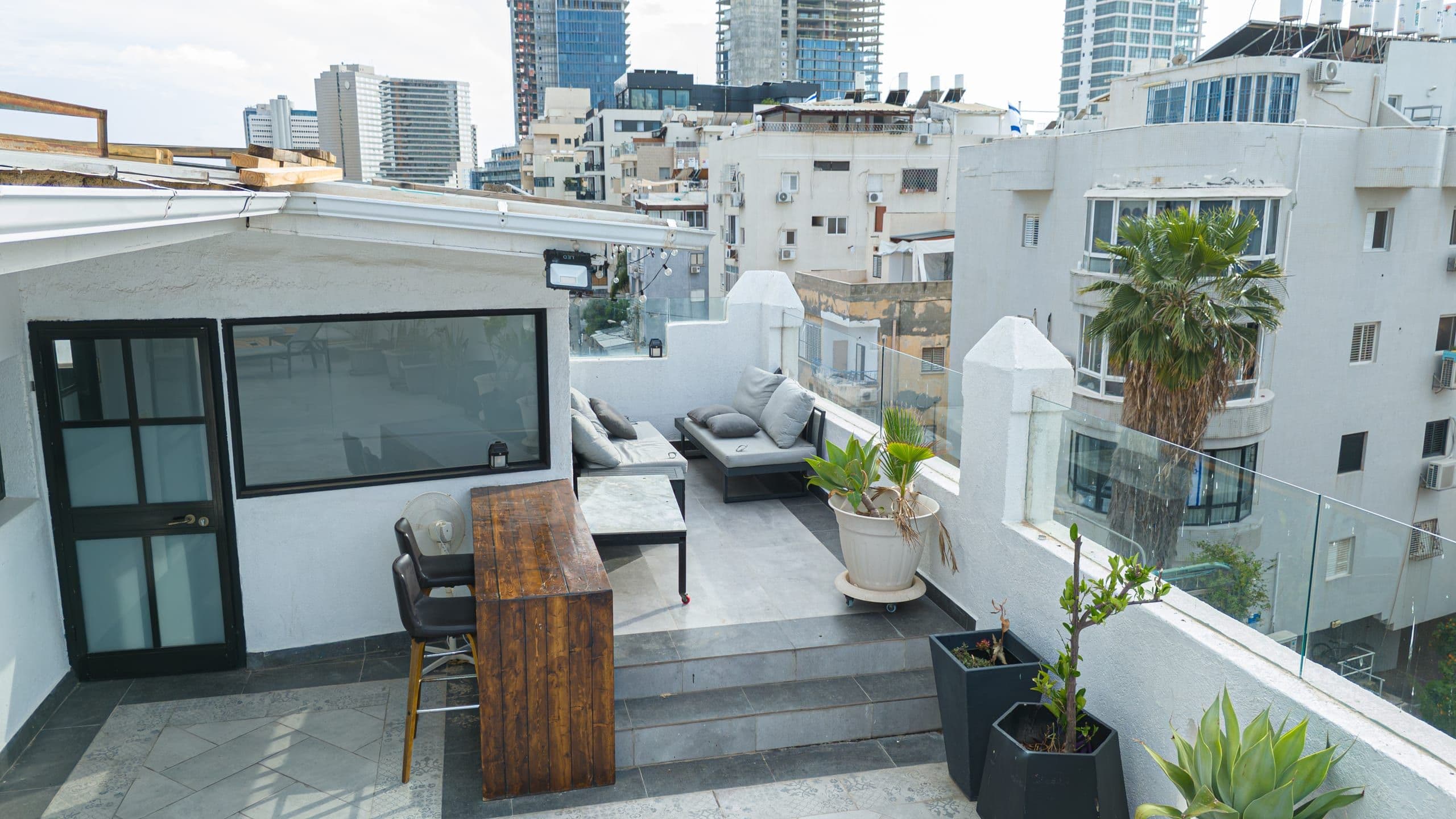
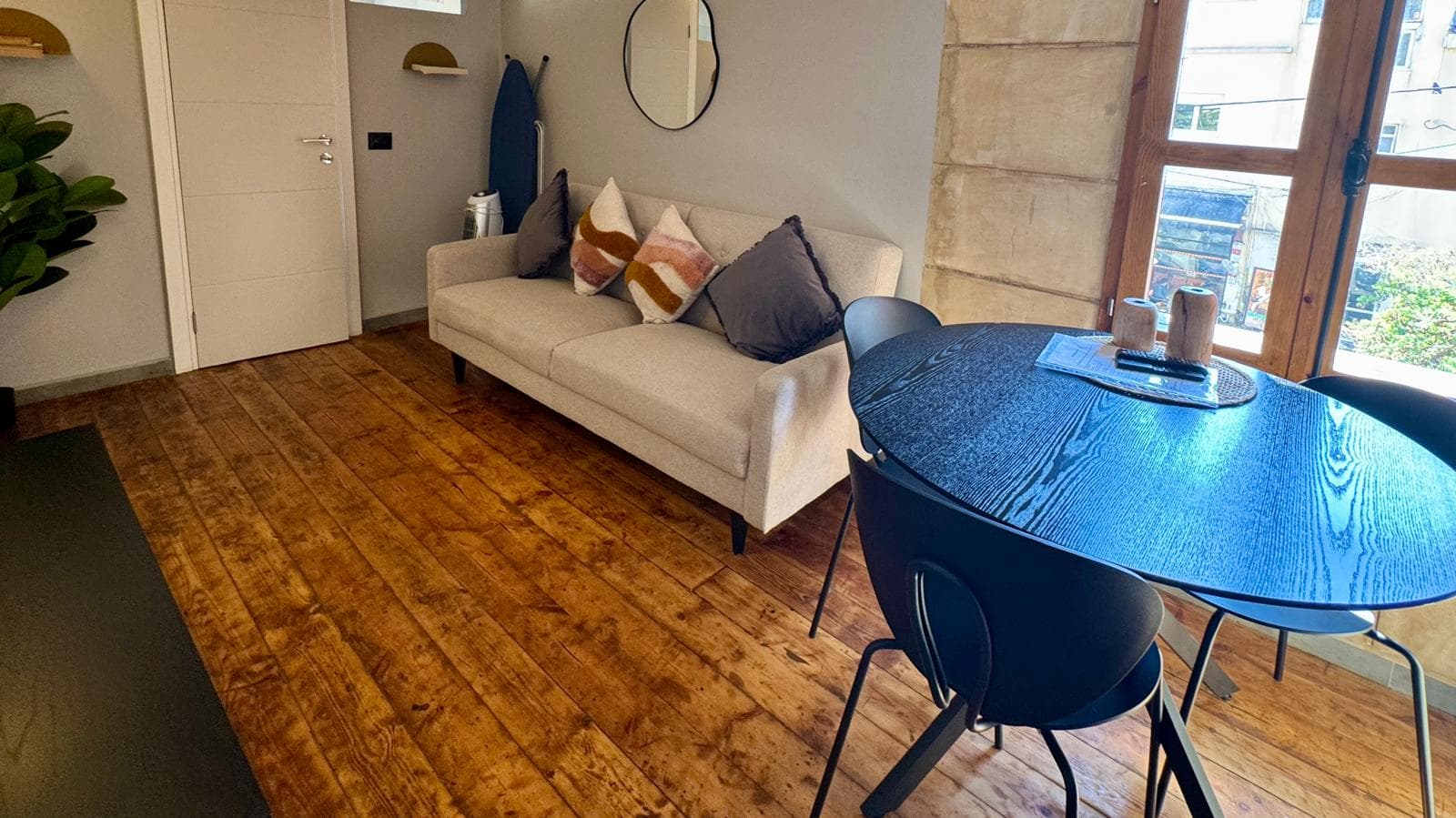
That proximity is the practical reason to stay here. Or Hakerem sits inside the old quarter, which puts the produce stalls, the beach and the artisans' fair within a few minutes on foot of the front door. Our guide to the Yemenite Quarter explains what else is within that radius, and the apartments are a short walk from all of it.
Sources
- Carmel Market, for the market's location, the Nahalat Binyamin expansion and the opening days.
- Kerem HaTeimanim, for the neighbourhood's 1906 founding and its position beside the market.
- Carmel Market, Tel Aviv, for the account of the market's origins as "HaKerem" and the post-1917 traders. A commercial source, cited here for the narrative rather than as an archival record.
Ready to experience Tel Aviv?
Stay in the heart of Kerem HaTeimanim — just steps from Carmel Market and Banana Beach.