Who the Streets of the Kerem Are Named For
Street signs in most of central Tel Aviv commemorate the obvious: prime ministers, poets, donors, the founding generation of the city. Walk into Kerem HaTeimanim and the register changes completely. The quarter's lanes are named after a coppersmith, a provincial rabbi, a southern Yemeni port community and, in one case, a year.
None of these names will mean anything to a visitor without a prompt. They are also the most concentrated piece of Yemenite Jewish history anywhere in Israel's street grid, which is why guests sometimes arrive at an address like Chaim Habshush 23 and ask who he was. Here is the answer, street by street. If you want the broader story of how the quarter came to exist at all, start with the vineyard that predates Tel Aviv.
Chaim Habshush — the coppersmith who crossed Yemen
חיים חבשוש, Hayyim Habshush, was born in Sana'a around 1833 and died in 1899. By trade he was a coppersmith. That is not what he is remembered for.
In 1870 a French-Jewish orientalist named Joseph Halévy arrived in Yemen intending to reach Najran and copy the ancient Sabaean inscriptions there. He needed someone who could move through the country, speak to people, and keep him alive. Habshush took the job.
The expedition was a success and the partnership was difficult. Halévy travelled disguised as a rabbi collecting alms — a cover that invited suspicion, since such collectors were often assumed to be magicians or treasure hunters. Habshush had his own motives: he collected inscriptions himself and was curious about what the European knew. The two men fell out.
What makes Habshush remarkable is that he wrote it down. Decades later he produced a full account of the journey in Sana'ani Arabic, from the guide's point of view rather than the scholar's — a near-unique document, since the local fixers who made nineteenth-century European expeditions possible almost never left their own version.
The manuscript was edited by the great scholar of Jewish life in Islamic lands, S. D. Goitein, and published by Hebrew University Press in 1941. An English translation by Alan Verskin appeared under the title A Vision of Yemen. Habshush later worked with other European travellers, including Eduard Glaser, copying inscriptions and collecting old books.
A short lane in the Kerem carries his name. There is no plaque explaining any of this.
Yihye Qafih — the rabbi who worked as a goldsmith
יחיא קאפח, Yihye Qafih (1850–1931), was Sana'a's leading rabbinic figure in the late Ottoman period. He was orphaned young, raised by his grandfather, and supported himself as a goldsmith while teaching and studying outside working hours. He served briefly as Chief Rabbi of Yemen around 1899–1900 and sat on the Sana'a rabbinic court until his death.
He is best known for the Dor Deah movement — dor de'ah, "a generation of knowledge" — a rationalist current within Yemenite Judaism that argued for Maimonides and against the authority of the Zohar and later Kabbalah. It was a genuine intellectual controversy, and it split the community.
The detail worth noticing is that Habshush moved in the same circles. Goitein's account of the movement names him among the figures associated with it before it acquired its label. Two streets in one small Tel Aviv neighbourhood, two men who knew the same arguments in the same city two thousand miles away.
Qafih's grandson, Rabbi Yosef Qafih (1917–2000), became one of the twentieth century's foremost scholars of Maimonides and a leading voice of Yemenite Jewry in Israel.
תרמ"ב — a street named after a year
Tarmab is not a person. The Hebrew letters תרמ"ב are a number: 5642, the year that ran across 1881 and 1882.
That year a group of roughly two hundred Yemenite Jews left for Ottoman Palestine in a movement they called E'eleh BeTamar — "I will climb up into the palm tree", from the Song of Songs. Most settled in Jerusalem and Jaffa. They arrived alongside, and by some accounts just before, the First Aliyah from Eastern Europe that standard histories treat as the start of modern Jewish immigration.
A generation later, when plots came up on the Jaffa dunes, it was largely these families and their children who bought them. The street records the departure rather than the arrival.
Kehilat Eden — a community, not a person
קהילת עדן, the Community of Aden, names the Jewish community of the southern Yemeni port that was for centuries a hub of trade between the Red Sea and India. Aden's Jews were a distinct community with their own customs, and the street acknowledges them separately from Sana'a.
Number 13 carries a memorial plaque to the Dahabani family. Yehya Dahabani drove Theodor Herzl's carriage during Herzl's visit to Palestine in 1898, and later settled in this neighbourhood. A newsreel crew filmed him at home here in 1960, aged eighty-two, still showing the watch Herzl had given him.
Rabbi Meir, Nahliel, HaCarmel
Not every street is a Yemenite reference. Rabbi Meir marked the quarter's southern edge in its early decades. HaCarmel gave its name to the market that grew along it in the 1920s — a story told in how Carmel Market began. Nahliel, Yishkon and the Carmel alleys fill in the grid between them.
The mix is the point. A neighbourhood founded in 1906 by people who had arrived from Yemen via Jerusalem named its streets after the things that had brought it there: the year it left, the men who had documented the community it left behind, and the port on the other end of the peninsula.
Why these names and not others
It is worth stepping back to notice how unusual this is.
Most of central Tel Aviv is named on a national register. The streets around the Kerem commemorate Zionist leaders, European-born writers, First Aliyah settlements, donors and dates from the founding of the state. It is a coherent system, and it tells one story: the story of a movement that came from Europe and built a city.
The Kerem does not participate in that system. Its names point in a different direction entirely — south, to the Arabian Peninsula, and backwards, to a community that had been in Yemen for well over a thousand years before any of this began. A coppersmith who never left the Middle East. A rabbi who argued about Maimonides in Sana'a. A port city at the mouth of the Red Sea. A Hebrew year that means nothing unless you know what happened in it.
Part of the explanation is simply that the neighbourhood named itself. It was laid out in 1906, before the municipality existed to impose a scheme, and it was laid out by people with their own set of references. By the time Tel Aviv had a street-naming committee, the Kerem's lanes already had names and kept them.
The other part is that this is what the founders wanted recorded. Not the landowners who sold them the plots — Chelouche, Moyal and Amzalag have streets elsewhere in the city, not here. Not the officials who approved the plan. The names here are the community's own: its scholars, its journey, and the places it came from.
That is rarer than it sounds. Immigrant neighbourhoods usually end up named by someone else, and the original references get smoothed away within a generation or two. Here they survived, partly because the quarter was poor and nobody thought it worth renaming, and partly because the families who chose the names stayed put for a century.
Read that way, the street grid is not decoration. It is the oldest surviving document the neighbourhood produced about itself.
Finding an address here
A practical note, because the street names cause real confusion for anyone arriving with a booking.
The transliterations are inconsistent across signage, maps and delivery apps. Chaim Habshush appears under at least three spellings in Latin letters, and mapping services do not always agree with the sign on the wall. If you are searching for an address, the Hebrew spelling is more reliable than the English one: חיים חבשוש will find the street when "Chaim Chabshush" sometimes will not.
The second thing to know is that house numbers in the Kerem do not always run the way you expect. The quarter grew around courtyards rather than along planned frontages, so a building can sit back from the lane with its entrance on a different side from its number. Taxi drivers know this; navigation apps occasionally do not.
If you are coming to us, give the driver the street in Hebrew and the nearest corner rather than the number alone, and you will arrive first time.
Reading the quarter on foot
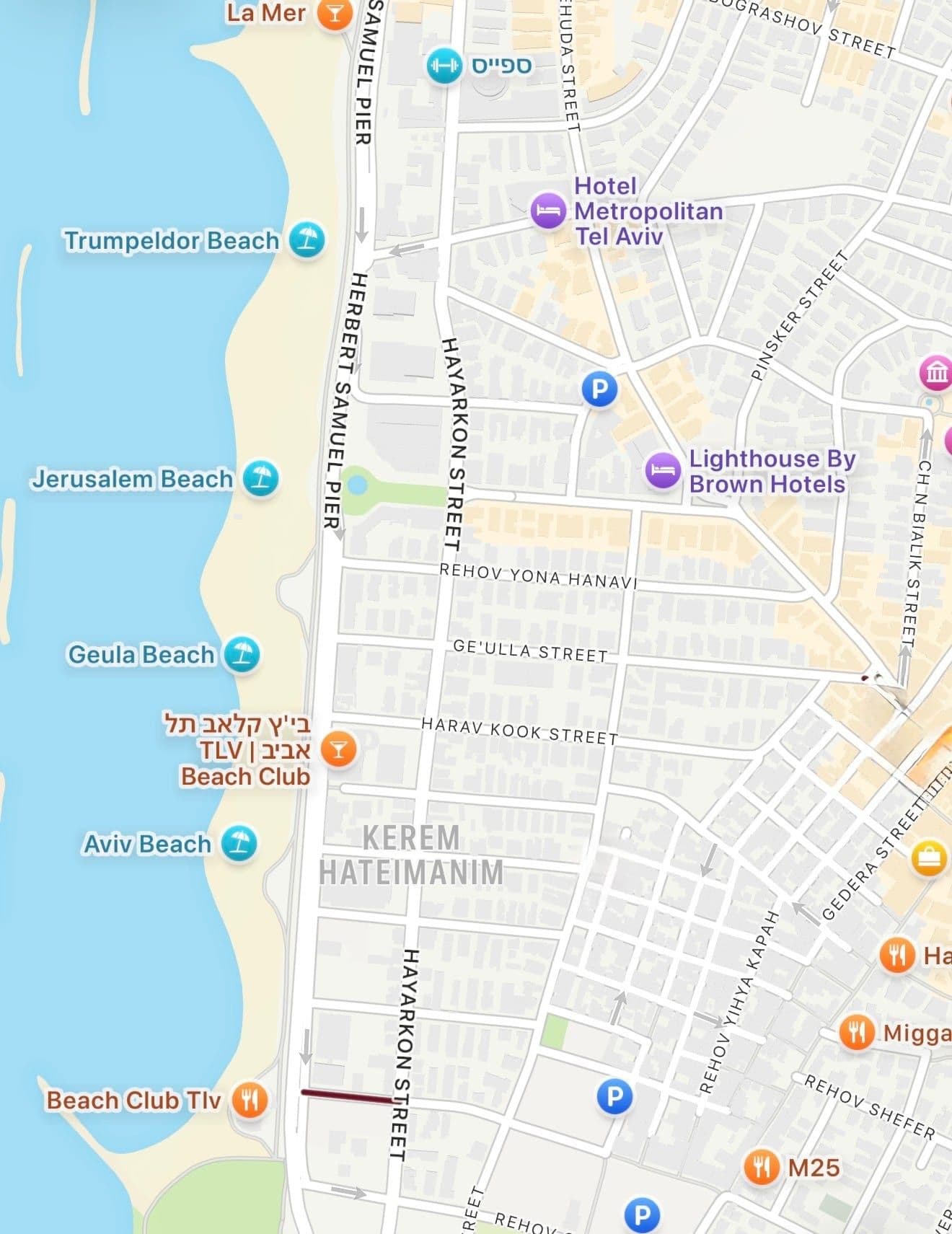
The whole network is walkable in half an hour. The lanes are short, the signs are bilingual Hebrew and English, and the transliterations wander — Habshush appears as Habshush, Chabshush and Havshush depending on which sign you are standing under.
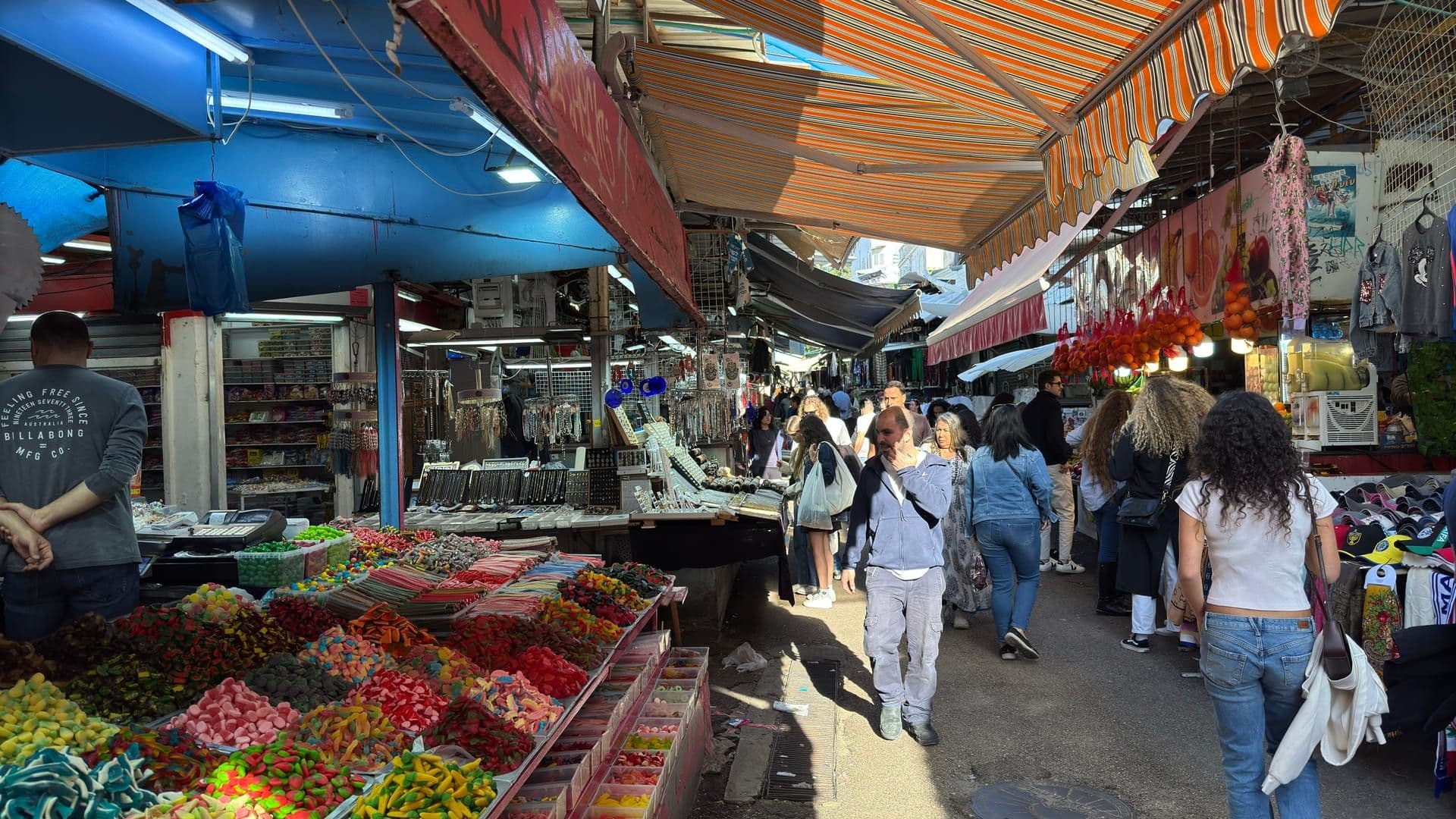
It is worth doing slowly, preferably in the morning before the market noise reaches this far in. Our guide to the Yemenite Quarter sets out which streets reward the detour and where to stop for food.
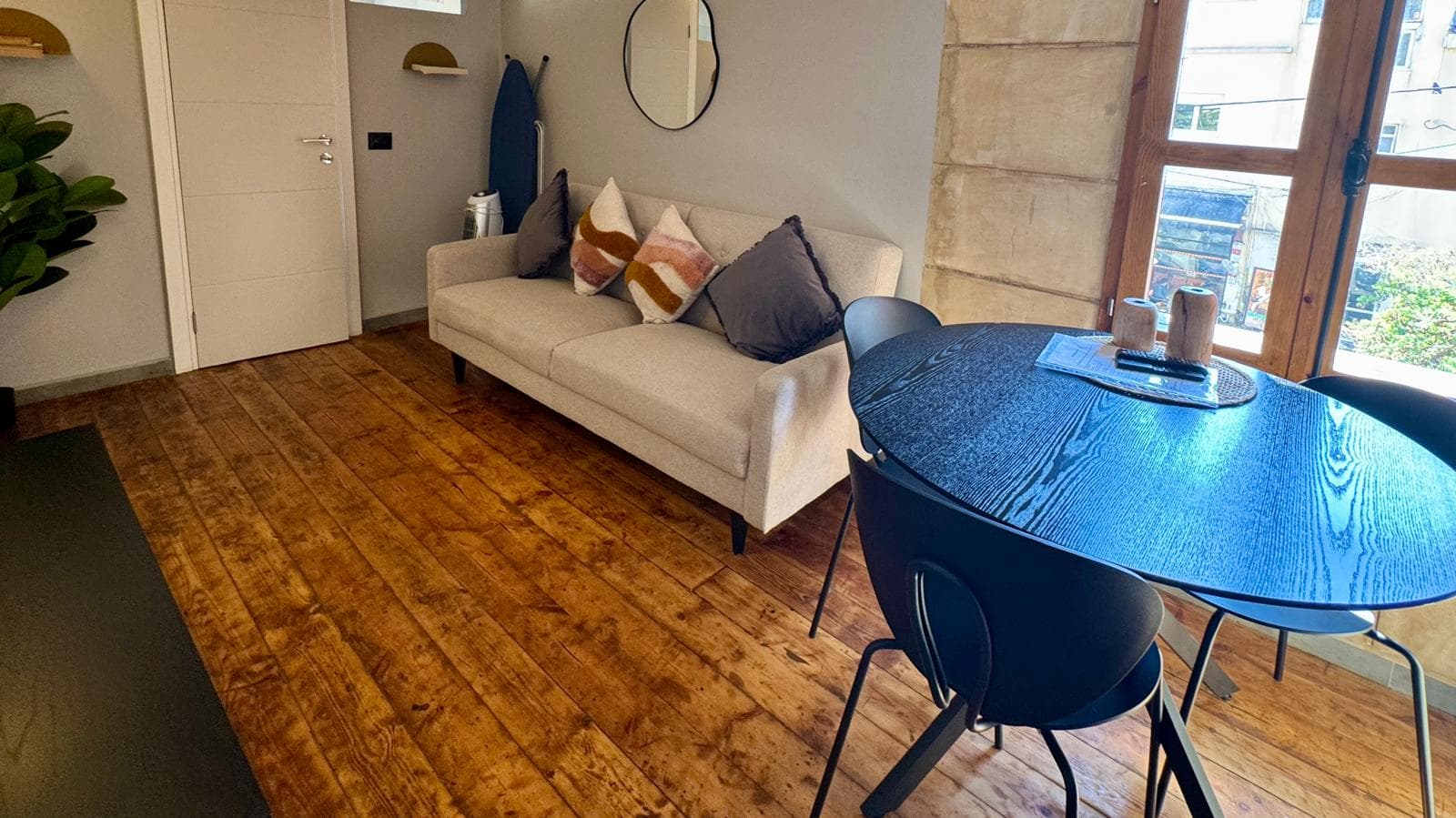
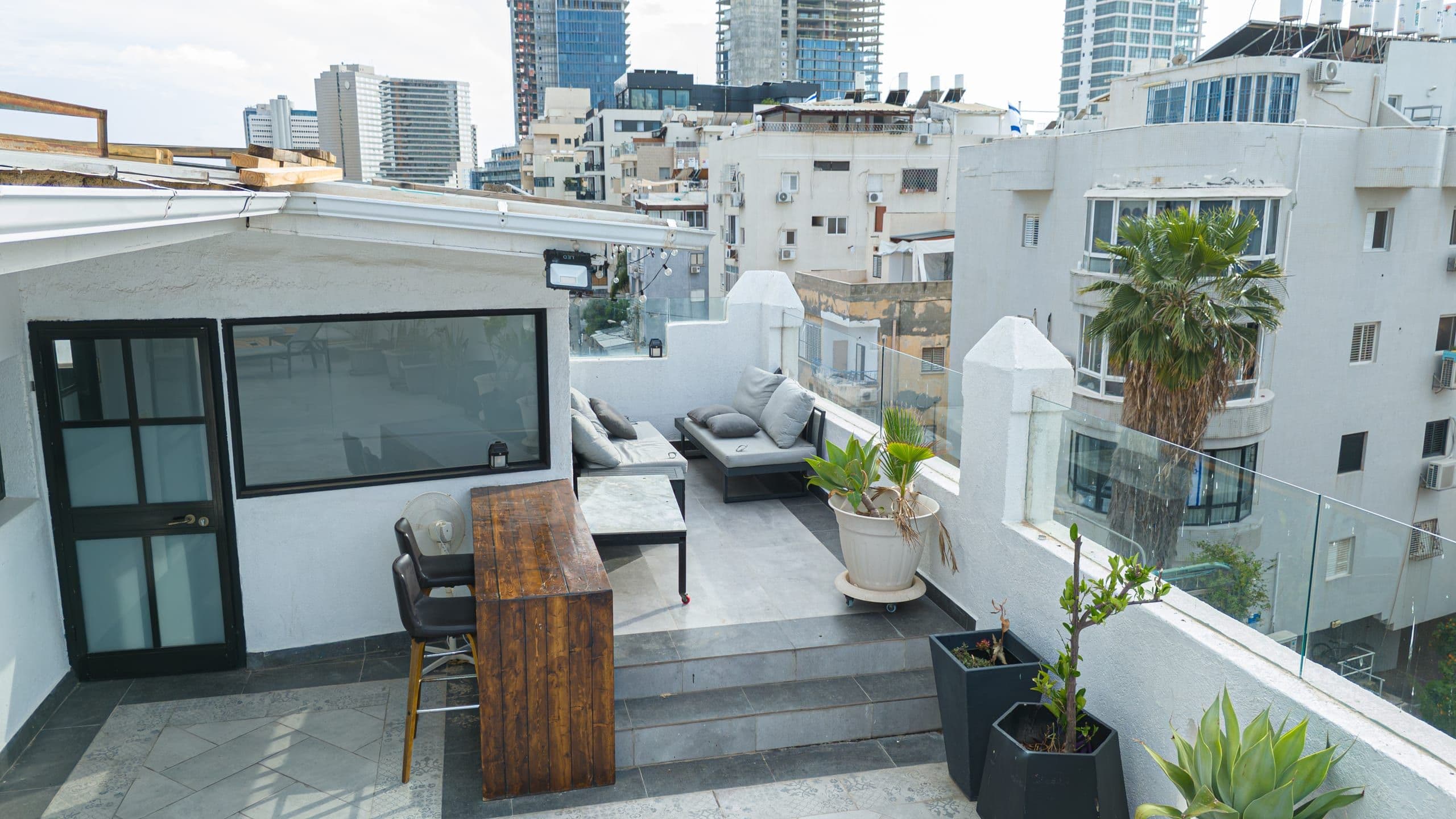
Or Hakerem is inside this grid, which means the walk starts at the front door. Browse the apartments if you would rather read these signs on the way back from breakfast than on a map.
Sources
- Hayyim Habshush and A Vision of Yemen, Stanford University Press, for the 1870 expedition and the travel narrative.
- Yiḥyah Qafiḥ and Dor Daim, for Qafih's life and the movement.
- Yemenite Jews in Israel, for the E'eleh BeTamar wave of 1881–1882.
- Kerem HaTeimanim, Hebrew Wikipedia, for the Kehilat Eden plaque and the quarter's early boundaries.
Ready to experience Tel Aviv?
Stay in the heart of Kerem HaTeimanim — just steps from Carmel Market and Banana Beach.