Small Jewish Celebrations in Tel Aviv
A Jewish lifecycle celebration has one feature that no other kind of party has: the date is not entirely yours to choose. A brit mila lands on the eighth day. A bar mitzvah follows a birthday and a Torah reading. A Shabbat meal begins when Shabbat begins, not when the caterer is ready. Everything else in the planning has to arrange itself around that fixed point.
This is what makes small Jewish celebrations in Tel Aviv a different planning exercise from a birthday dinner or a private party. If you are working out the general shape of an intimate event — the atmosphere, the running order of the evening, the guest list — our guide to planning a private celebration in Tel Aviv covers that ground. This one is about the religious and calendar constraints that sit underneath it, and the practical decisions they force.
Which celebrations actually suit an intimate venue
Not every simcha wants a hall. A great many of them are better small.
A brit mila is typically a morning gathering of twenty to forty people that is over within two hours. A bat mitzvah for a girl who does not want a dance floor and two hundred guests is often far happier as a long family lunch. An engagement, a vort, an aufruf, a family meal on the Shabbat before a wedding, a havdalah gathering to close a weekend — these are all events where a room that holds sixty comfortably is a better setting than a hall built for three hundred.
The common thread is that the ceremony is short and the meal is the event. What you need is somewhere people can sit, eat properly, hear each other and stay late, with the option of moving outside. That is a very different brief from a wedding venue, and it is worth being clear about it early, because most venue enquiries are answered as though every event were a wedding.
The calendar decides your date before you do
Start with the Hebrew calendar, not the Gregorian one, and check it before you book anything else.
Weddings and celebrations with music do not take place during the Omer period between Passover and Shavuot, other than on the permitted days, nor during the Three Weeks leading to Tisha B'Av. The month of Elul, the High Holy Days, Sukkot and Passover each carry their own constraints and their own competition for suppliers. Chol HaMoed — the intermediate days of Sukkot and Passover — is a popular window for family gatherings precisely because everyone is already off work, which also means it books out first.
Then there is the weekly rhythm. In Israel the working week runs Sunday to Thursday. Friday is a short day that empties out by mid-afternoon, and everything stops for Shabbat. An event on Friday must finish well before candle lighting, which in a Tel Aviv winter can mean four in the afternoon. A Saturday night event cannot begin until Shabbat has ended, which in summer can mean after nine. Neither of these is a problem, but both have to be designed for rather than discovered.
If relatives are flying in, add one more layer: work backwards from when they land, not from the ceremony. Jet lag and a Friday arrival are a poor combination.
Bar and bat mitzvah: plan the week, not the party
Families coming to Israel for a bar or bat mitzvah rarely come for one event. They come for a week, and the celebration is one afternoon inside it.
That changes what you should be looking for. The ceremony itself may be at the Kotel, at a synagogue, or at a Masada sunrise, and it is usually arranged directly with the relevant institution. What you then need is somewhere for the meal afterwards, and somewhere for the family to actually be for the rest of the week — which is often the same decision.
A practical sequence: fix the ceremony date and location first, then the meal venue, then the accommodation, then everything else. Families frequently do this in the wrong order and discover that the apartments near the meal are gone. Booking six to twelve months ahead is normal for spring and autumn dates.
Brit mila: built for short notice
A brit is the one celebration you cannot schedule in advance, and any venue that cannot accommodate that is not really a candidate.
In practice this means you want somewhere that can confirm within a day or two, a caterer who works at that speed, and a simple format — a morning, a light meal, a room that does not need three days of setup. Small venues are better at this than large ones for the obvious reason that there is less to reconfigure.
The other constraint is timing within the day: a brit takes place in the morning, so you need a space available at nine or ten, not one that only opens for evening events.
Decide the kashrut level before you speak to caterers
This is the question that most often derails a plan late, and it is the easiest to settle early.
Decide first what standard the event needs to meet, and be honest about who in the family that standard is for. A meal that must satisfy an observant grandparent or a visiting rabbi is a different brief from one where the family simply wants everything kosher-style. Rabbanut certification, Mehadrin, Badatz and a fully glatt kitchen are not interchangeable, and the difference shows up in cost and in the list of caterers available to you.
Then work out what that implies for the space. Catered kosher events are usually delivered by a caterer working with their own supervision rather than cooked on site, which means what the venue needs to provide is serving space, not a kosher kitchen. Ask specifically whether the venue permits outside catering, whether there is space for the caterer to set up, and whether anything needs to be covered or kashered. A venue that has hosted kosher events before will answer these questions in one sentence; one that hasn't will be vague, which is itself the answer.
At Or Hakerem, kosher catering is arranged on request through caterers we work with regularly, and the certification level is agreed before anything is confirmed. The details of what the space can host are on our events page.
The ceremonial details people forget
Most of the planning attention goes to food and guest numbers. The details that actually cause problems on the day are smaller than that.
If the celebration includes any part of the service, you need a minyan, and you need to know who is counted in it rather than assuming ten men will materialise. If a Torah reading happens outside a synagogue, a scroll has to be borrowed and transported, and that is arranged weeks ahead, not days. For a brit, the mohel sets the time and often has views on the room, the light and where the chair goes; ask him before you commit to a layout.
Then the small physical things: a hand-washing station near the food, enough wine and a cup for kiddush, challah and a cover, candles if the event runs into Shabbat, and a quiet corner for anyone who needs to daven. If a mechitza is required, establish that at the enquiry stage — it changes the usable capacity of a room considerably, and it is not something to discover on the morning.
Shabbat as the celebration itself
Some of the best family gatherings in Tel Aviv are not events at all. They are a Shabbat where everyone happens to be in the same place.
This works particularly well in the centre of the city, where you can walk to a synagogue, walk back, and have the whole family within a few minutes of each other. It requires some preparation — food ready before candle lighting, lighting sorted, keys thought about — but very little organisation of the kind an event needs. Our guide to Shabbat-friendly stays in Tel Aviv sets out what to arrange in advance and what the city does automatically.
The practical advantage is that a Shabbat costs a fraction of a catered event and is frequently what people remember.
Where everyone sleeps
For a family celebration, accommodation is not a separate problem from the venue — it is part of the same one.
Guests who have to cross the city at the end of an evening leave early. Grandparents who need a lift leave earlier. If some of the party can stay in or immediately beside the space where the celebration happens, the evening lasts longer and the logistics largely disappear.
This matters most when the celebration falls on or beside Shabbat, when travelling is not an option for some of the guests. In that case the distance between where people sleep and where the meal happens is not a question of convenience but of who can attend at all, and it is worth settling early.
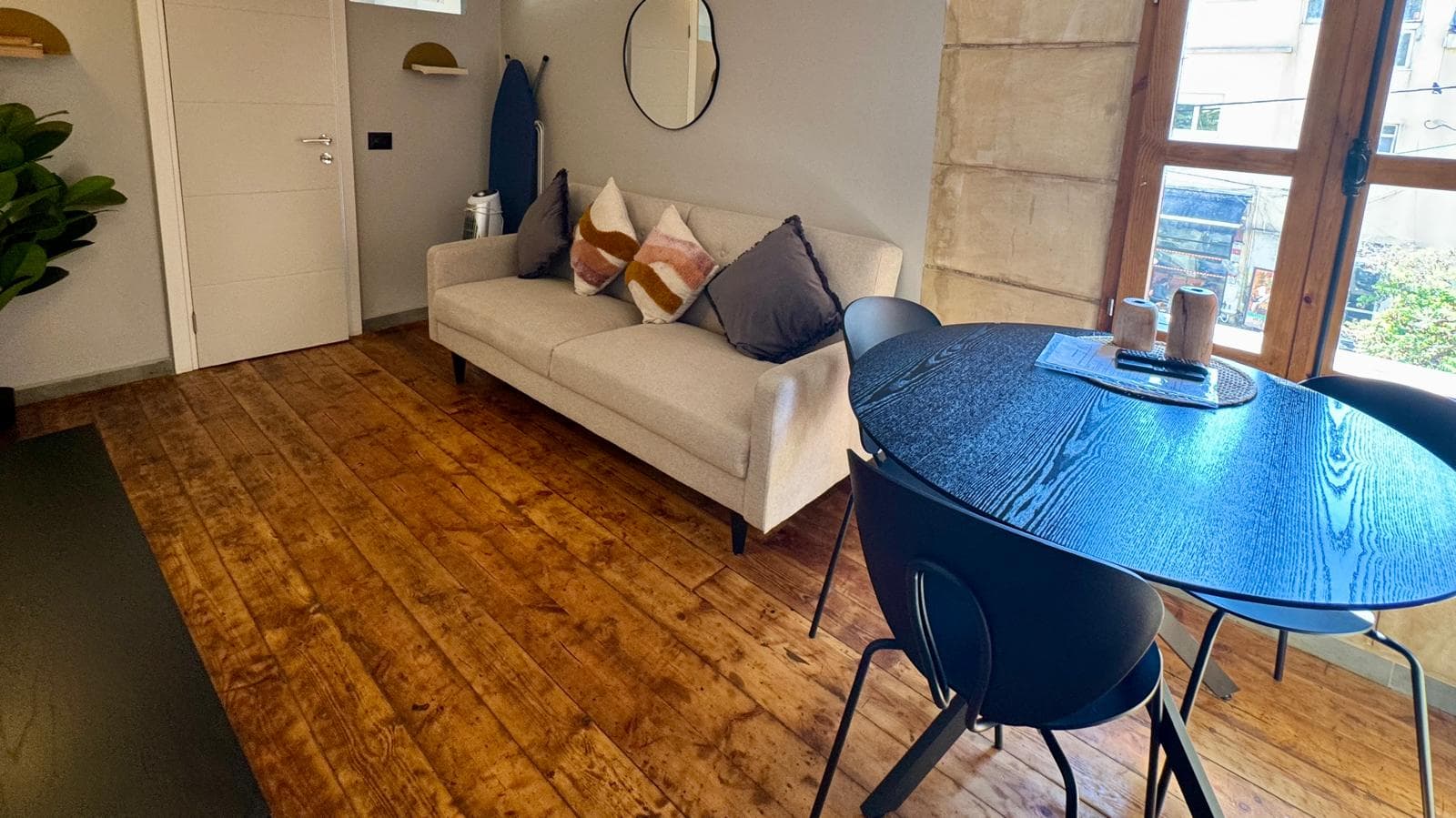
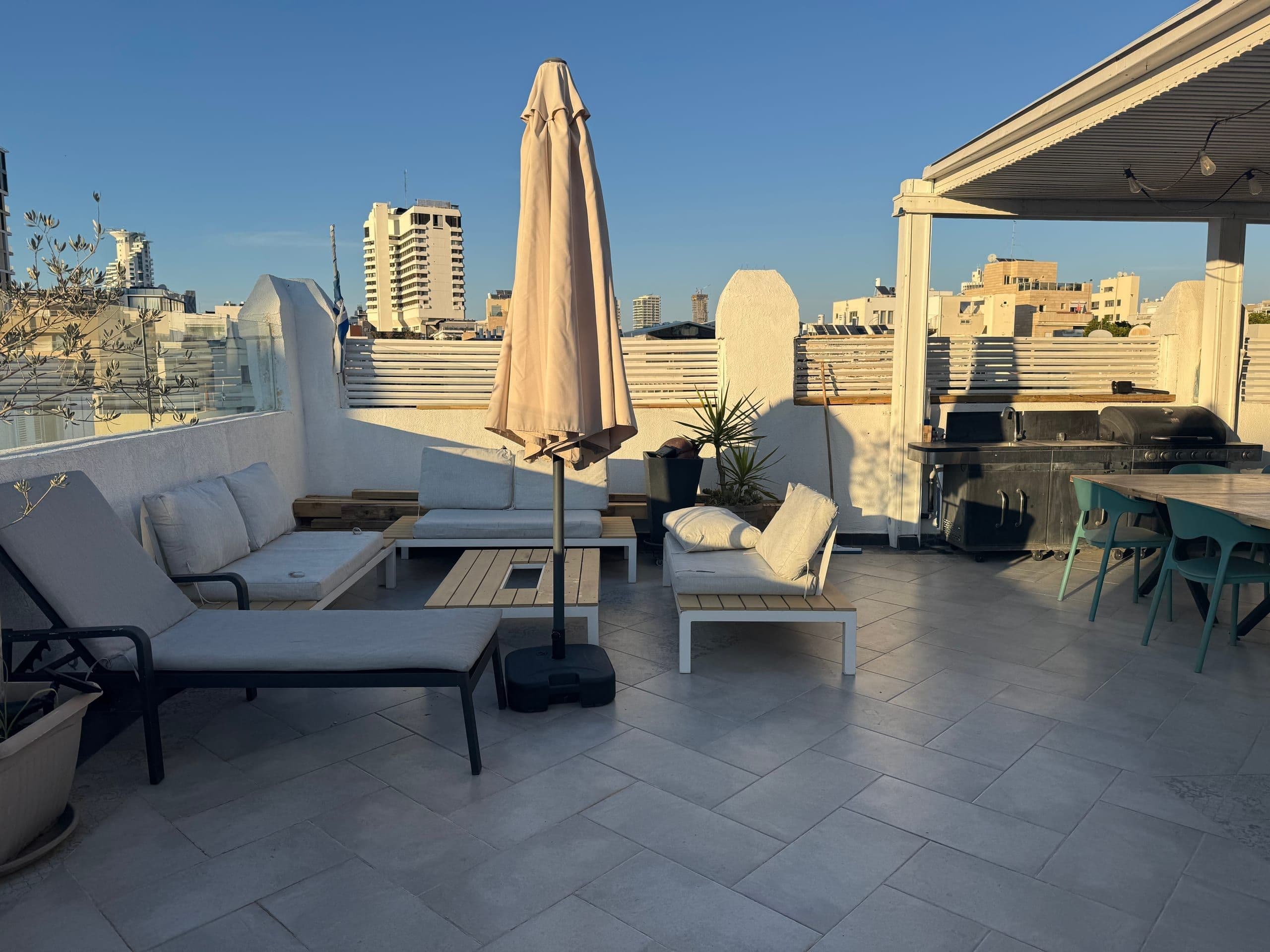
The penthouse with private jacuzzi works for exactly this pattern: it sleeps the core of the family, and its terrace holds a gathering in the evening, so the celebration and the accommodation are the same address. Relatives who need their own space can be placed nearby rather than across town.
Making the enquiry count
Venues can only answer well if the enquiry is specific. Send the date or the likely window, the number of adults and children, the type of celebration, the kashrut standard required, the rough timing, whether you need accommodation as well, and whether anyone in the party has mobility needs. That single message replaces a week of back-and-forth.
If you are planning a simcha in Tel Aviv and want to know whether an intimate setting fits it, get in touch with those details and we will tell you honestly whether we are the right place for it — and, if we are not, what kind of venue you should be looking for instead.
Ready to experience Tel Aviv?
Stay in the heart of Kerem HaTeimanim — just steps from Carmel Market and Banana Beach.